Fishing blog: Tales of angling adventures from around the world
Welcome to our fish blog! Here you can read more sage advice from anglers around the world. This is the place for news, tips and non-fiction fish tales from mountain lakes to distant beaches. Please feel free to comment and join in on the conversations and share some fish tales of your own!
This season’s snow pack promises plenty of water this summer. That is good news for folks needing irrigation water but not so much for anglers eagerly anticipating sunny days fishing in the high lakes in Rocky Mountain National Park. It’s a convenient coincidence that this lack of easy access comes when many of us are not at the peak of conditioning, even after a winter spent aerobically tying flies.
The streams and lakes in Estes Park at the “lower” elevations from 8500’ down were fishing great before the run-off came our way. Take advantage of this early season access near Lake Estes by fishing the Big Thompson River where it enters the lake by the 9-hole golf course. The trick is to fish early in the day before the runoff from a warm day melts the snow in RMNP and brings turbid water our way.
Or you can follow the trail to the west, across the bridge, to where the power plant might be running and creates a second inlet with warmer water. The discharge here is usually clear after the trip from Grand Lake through the Adam’s tunnel. When the power plant turbines are running, the area between the power plant and the lake is productive.
Below the lake, the Olympus Dam controls the flow down the Big Thompson Canyon. This popular stretch of accessible water is strictly artificial lures/catch and release from the dam downstream 8 miles to Waltonia Bridge. The settling and warming effect of Lake Estes plus the scouring this river bed has received recently keep sediment and turbidity to a minimum. The downside of this stretch is the popularity. Estes Guide services use this area heavily but only during “regular” hours. The trick right below the dam is to either fish it as the sun rises or after it sets. Go there when most folks are standing in lines at local restaurants and you will be rewarded.
We love to fish dry flies and rarely use nymphs. That being said, this is a great time of year to drift a bead head-flash back-pheasant tail nymph down the stream. In the evening, we mostly use a floating flying ant pattern. The ones with cellophane wings will reflect sunlight and flash in the setting sun. This fly must resemble a lot of different insects since its accepted most of the year. A dead drift is always a good presentation, but we find a short “skitter” and stop seems to get attention from the big lazy browns. It also helps us locate the fly when it’s getting dark and we just have to watch for the rise form.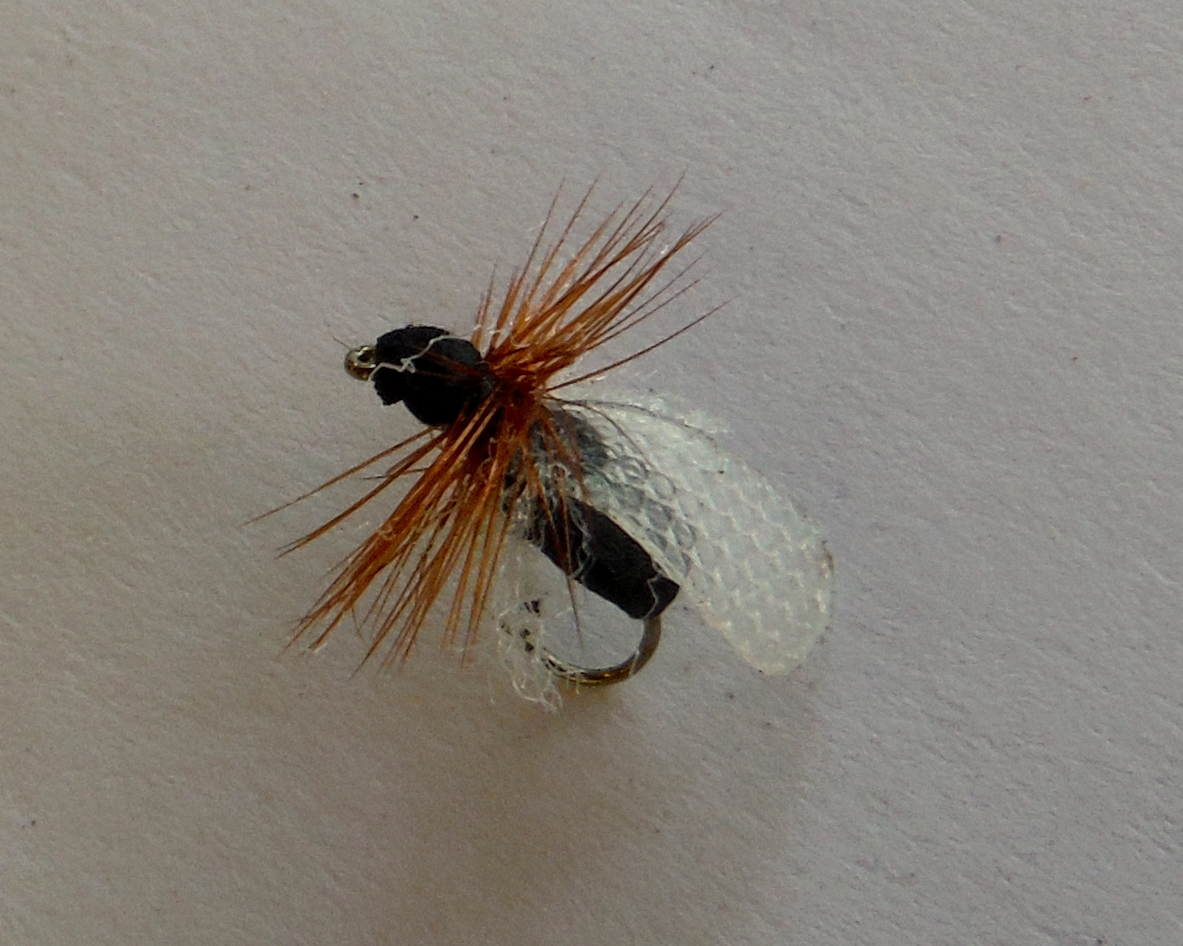
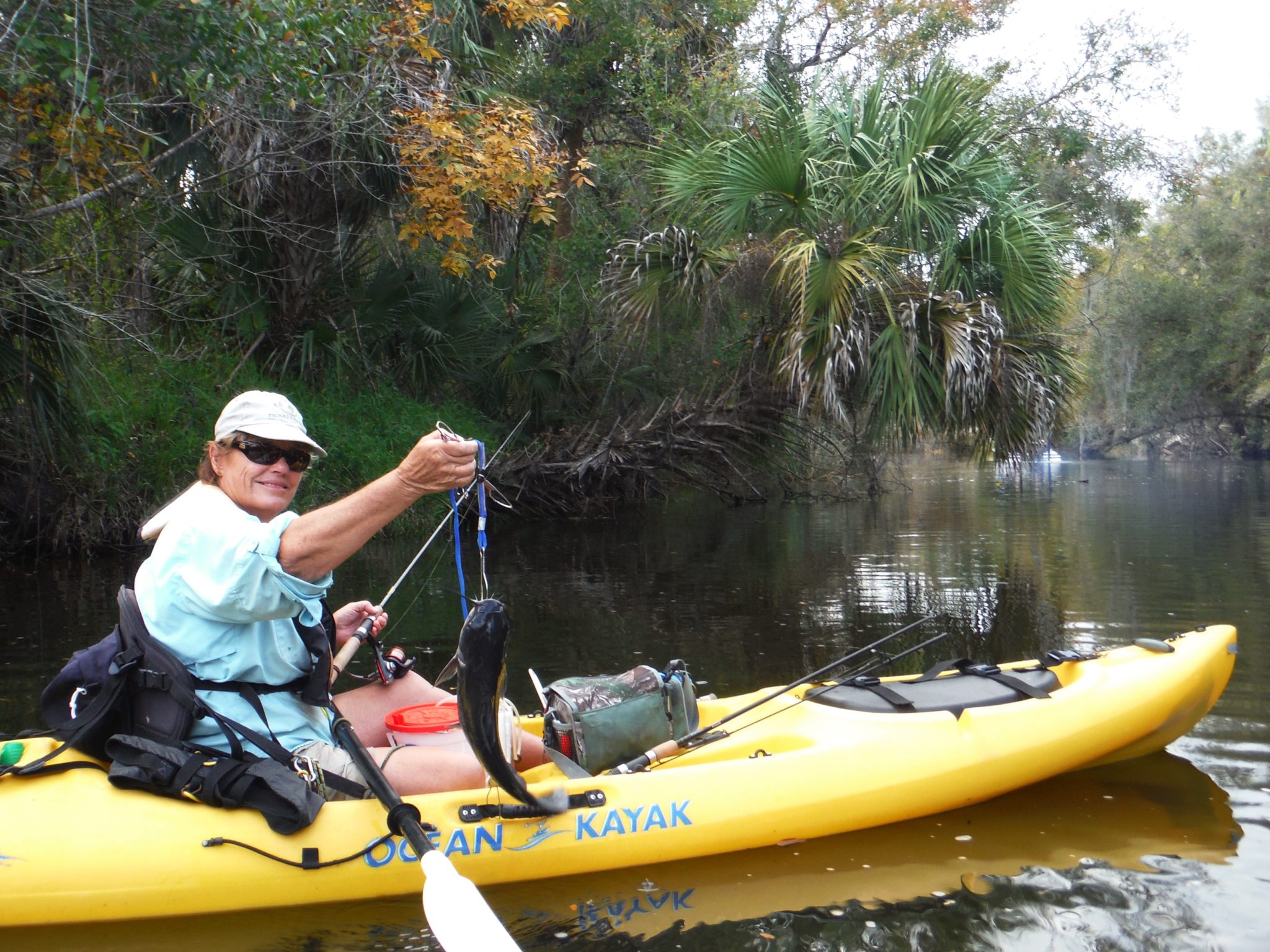
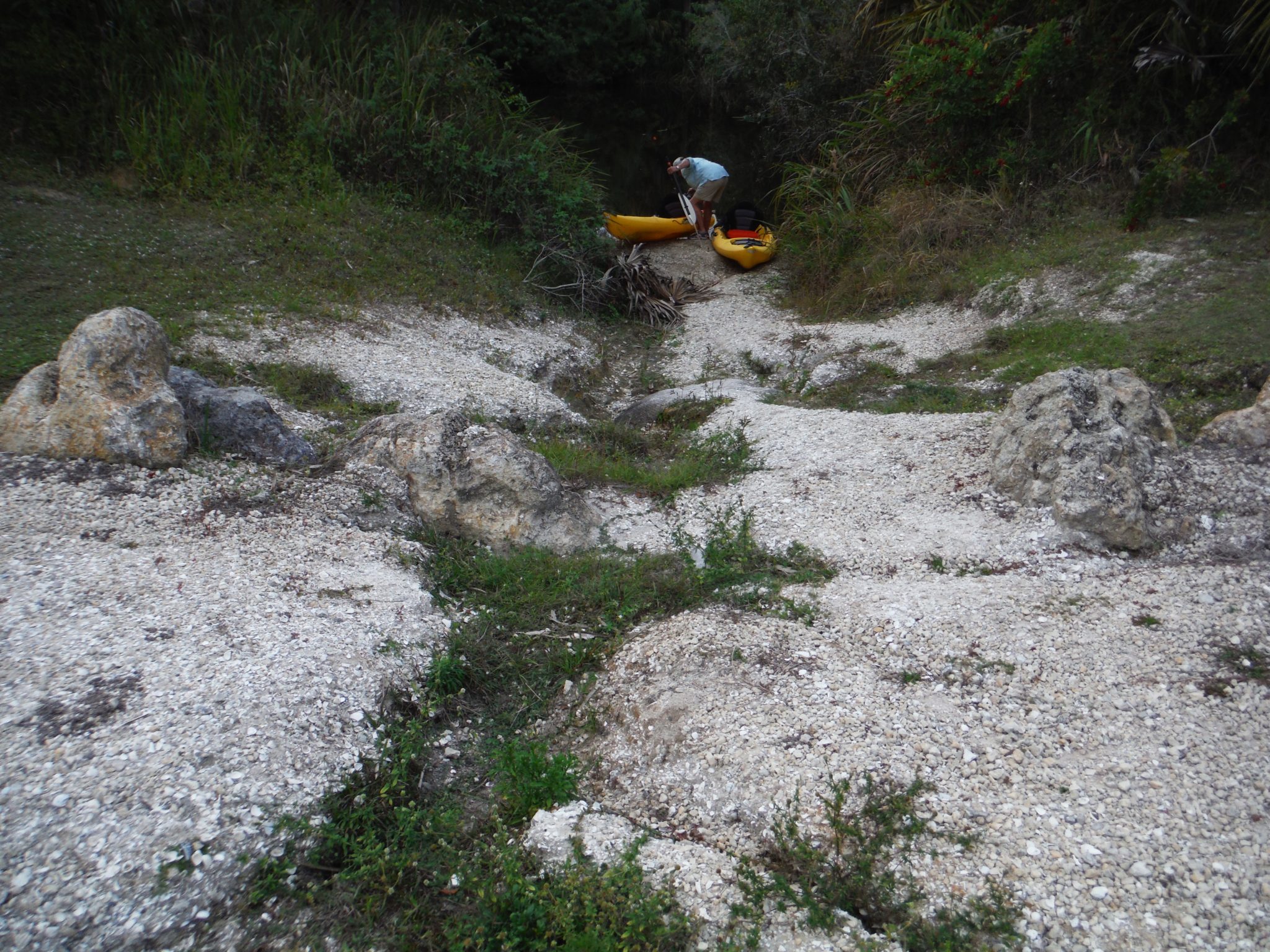
Once again we extended our tradition of fishing on New Year’s Day. 2019 found us on Shell Creek east of Punta Gorda searching for speckled perch in our kayaks. This was a completely different start to the year than last January 1 at Big Pass in Sarasota. That was a cold windy salt water trip and this year was a warm freshwater adventure. Kim caught numerous small bass and bream but ended the day with a nice channel catfish for dinner
 .
.
Here in Estes Park, we enjoy excellent cold weather fishing. Some folks put away their fly rods and get out the fly-tying stuff this time of year, but locals enjoy the winter bite. Nymphs are the obvious go-to fly now but on the sunny days a good hatch of midges will bring trout to the surface in mid-afternoon. So, watch the temperatures which will vary from shade to sunny areas and check out these suggestions for some winter fun.
The best-known water that remains open through the winter is the catch and release stretch directly below the Olympus Dam. This section of the Big Thompson River stays open due to the warm water releases from the depths of Lake Estes. In the summer it’s too popular with visitors and guides for locals to enjoy. The exception summer is that time late in the afternoon and early evening after the guides have taken their clients back to the shop and the visitors are standing in line at a local restaurant.
This same stretch will provide good fishing in the winter with a weighted nymph to reach the fish packed into the deeper holes along the river. The usual patterns will work but locals go to a minimally dressed nymph with a splash of red tied in. Other popular patterns include the rainbow warrior and prince nymph. A little flash seems to help trout find these flies without chasing them down which saves valuable calories needed for their survival until spring.
Another of our favorite spots is dependent on the flow from the power plant discharge. If the turbines are turning the water running into Lake Estes below the power plant can be productive. This warm “tunnel water” brings food and warmth, both of which help create a great winter fishery. Always remember that trout are cold blooded and their digestive system, like any chemical reaction, functions slowly when cold. Tiny nymphs and mid-day midge emergers are more digestible in these temperatures than larger prey. No need to wait until evening like we do in the summer; these hatches happen in the middle of the day and only last an hour or so. The north shore of this outlet provides protection from the north wind and access to the best areas to fish.
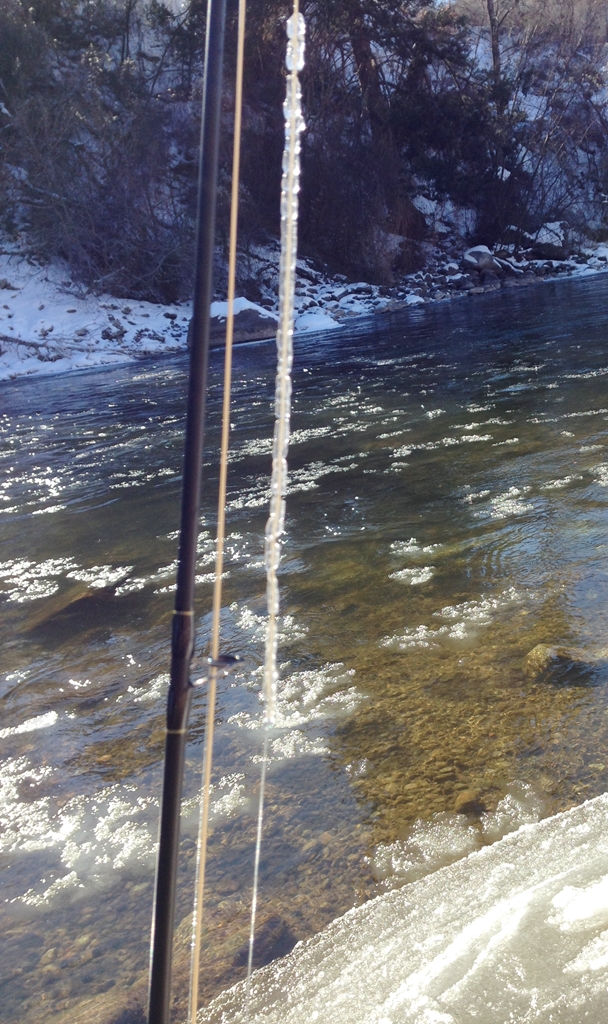
Our version of “ice fishing” can be enjoyed at the inlet of the Big Thompson River by the 9-hole golf course. Here, though there is no warm water flow, there will be open pockets of water in the ice on the river. The trick is to get your fly into the open spots on the upstream end of the open area. A weighted nymph plus a split shot may be required to get the nymph deep quickly before the end of the open water. The next issue to deal with is landing the fish before it runs under the ice and your tippet breaks on the sharp edge. If you do get the fish out of the water, drag it across the ice and unhook it quickly. Now, the real challenge becomes releasing the fish back into the water. Do not walk out on the ice to get to the water. River ice is variable in depth and may not support your weight. Instead, find an open spot close to the bank and skate the fish across the ice and into the water from shore. Another issue with winter fishing is having your line and rod guides freeze, making it difficult to cast. Take time to remove the ice after every few casts.
It has been a tradition of ours to fish on New Year’s Day as a great way to start the year. For years, Kimball ventured forth in the freezing weather while I cowered by the fire waiting for spring to begin my fishing year. However, after she came back with pictures and stories of the fish she was catching; I became a believer and now would not miss out on our first fishing trip of the year. We always catch fish, making this an excellent choice for beginning the New Year. Dress warm and try it, you’ll like it!!
For more information on winter fishing in Estes Park, check out our new “Angler’s Guide to RMNP-Second Edition” just released and ready for your angling friends and family this Christmas.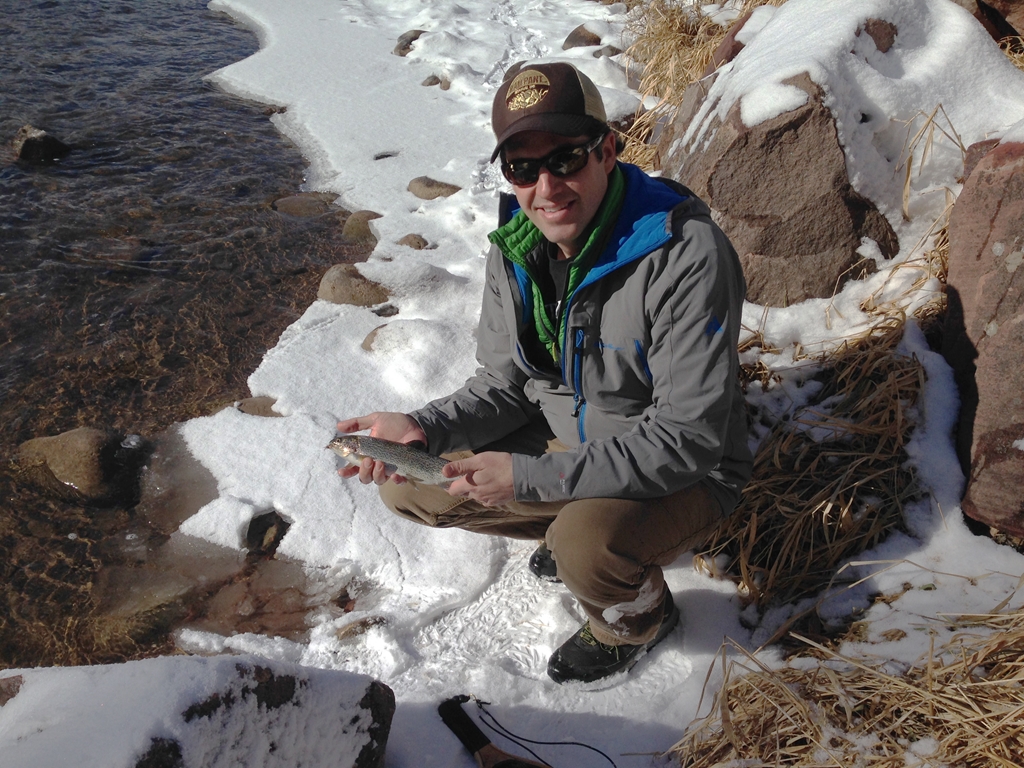
Les and Kimball Beery, local authors and angling addicts will present a program featuring the excellent fishing available in RMNP. Lakes and streams in their second edition will be featured with images and tips for the best areas and most productive flies for each. Their WATERPROOF field guide is designed for visiting anglers and contains 50 years of experience that even local anglers will enjoy.
Join Alpine Anglers Chapter #453 of Colorado Trout Unlimited at Elkins Distilling Company 1825 N Lake Ave. on Wednesday, September 19th from 6:30 – 8:00 PM. Enjoy this Free program and the company of local anglers.
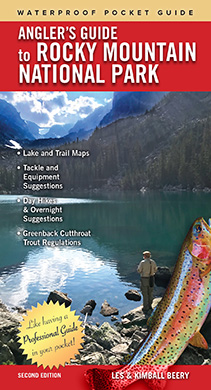
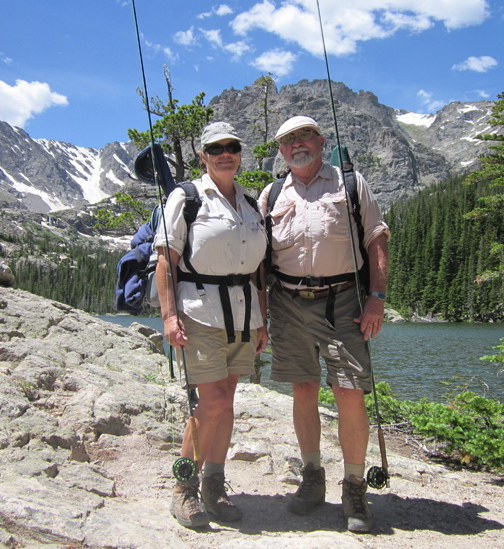
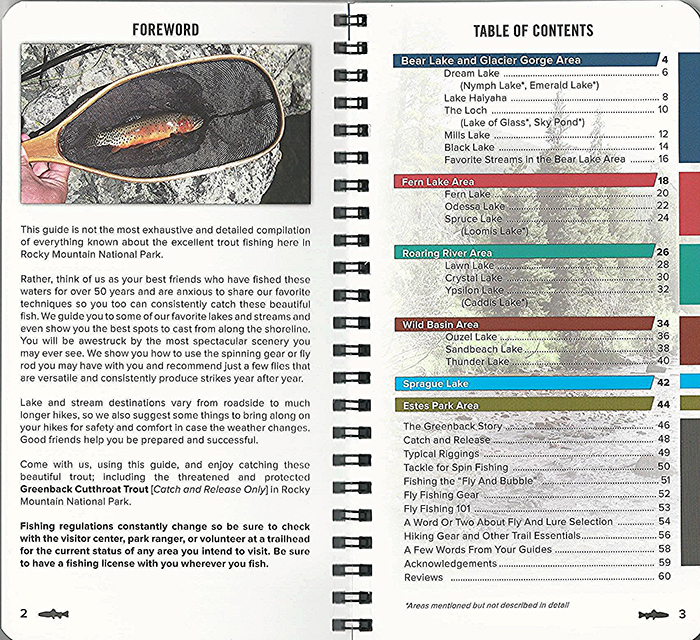
Table of Contents
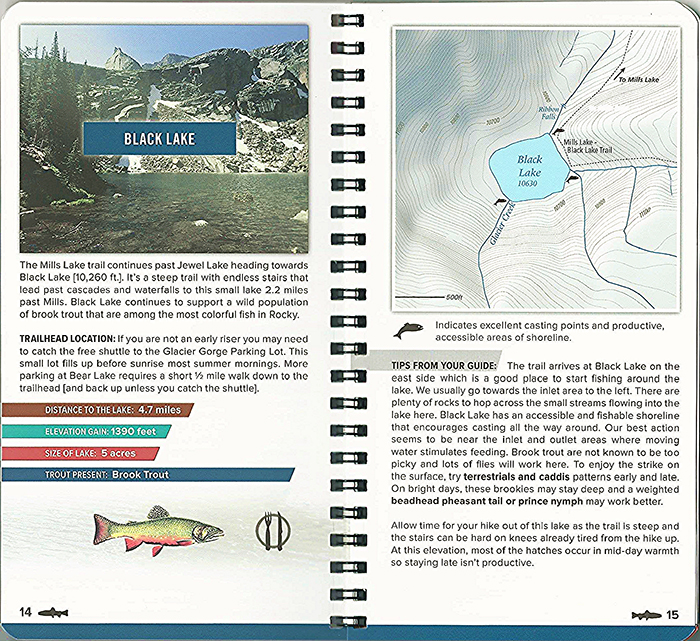
Black Lake
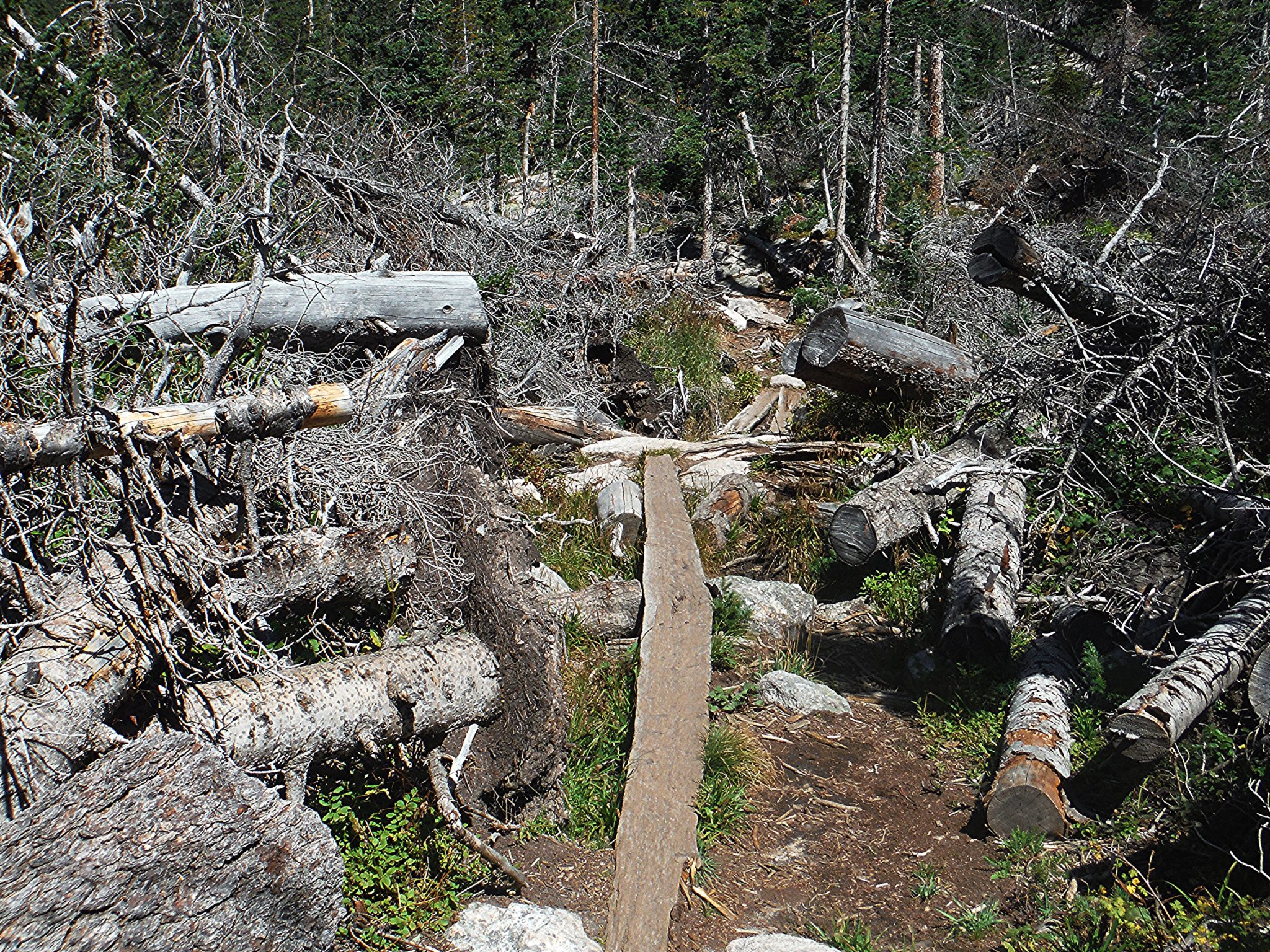
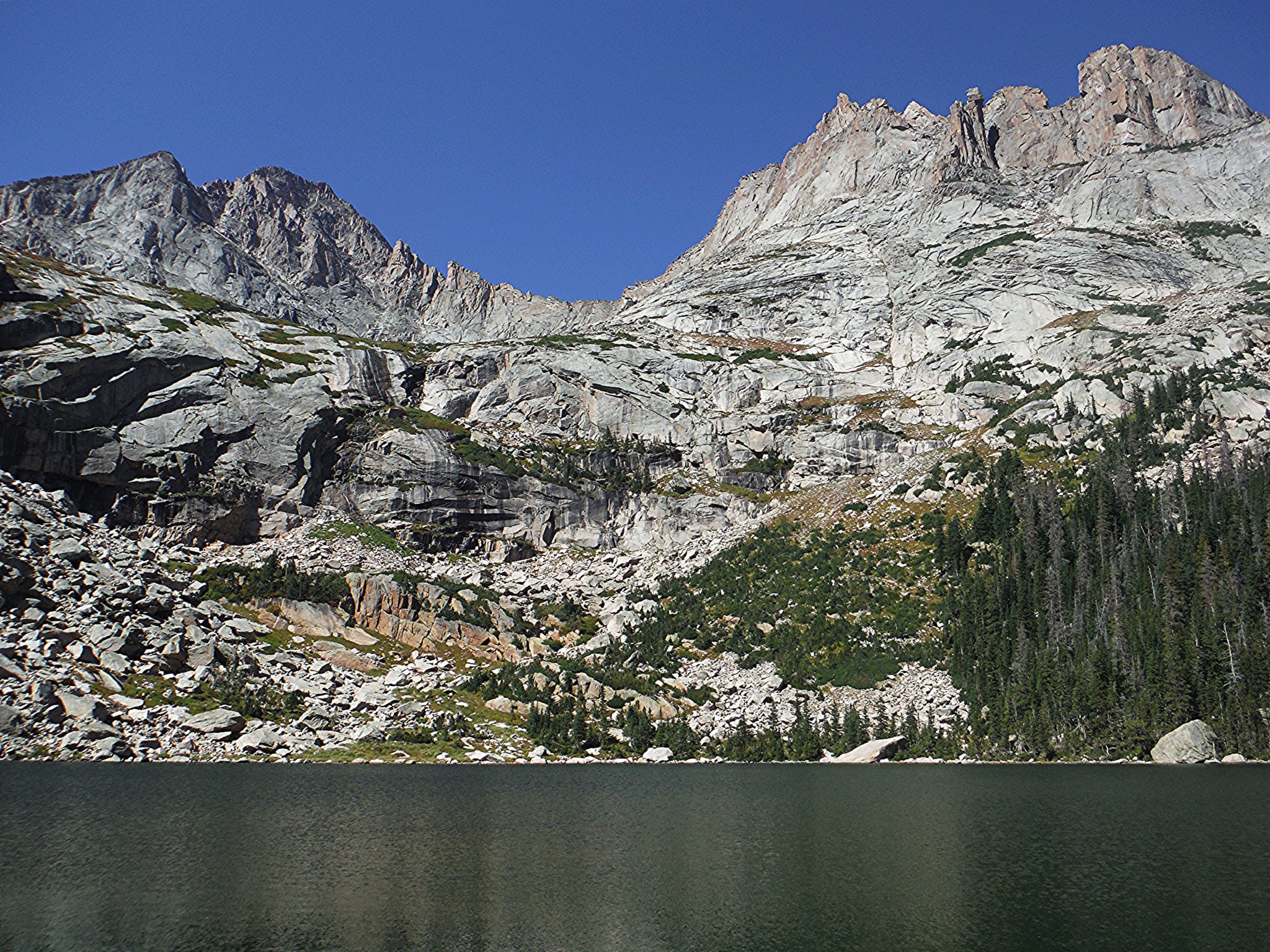
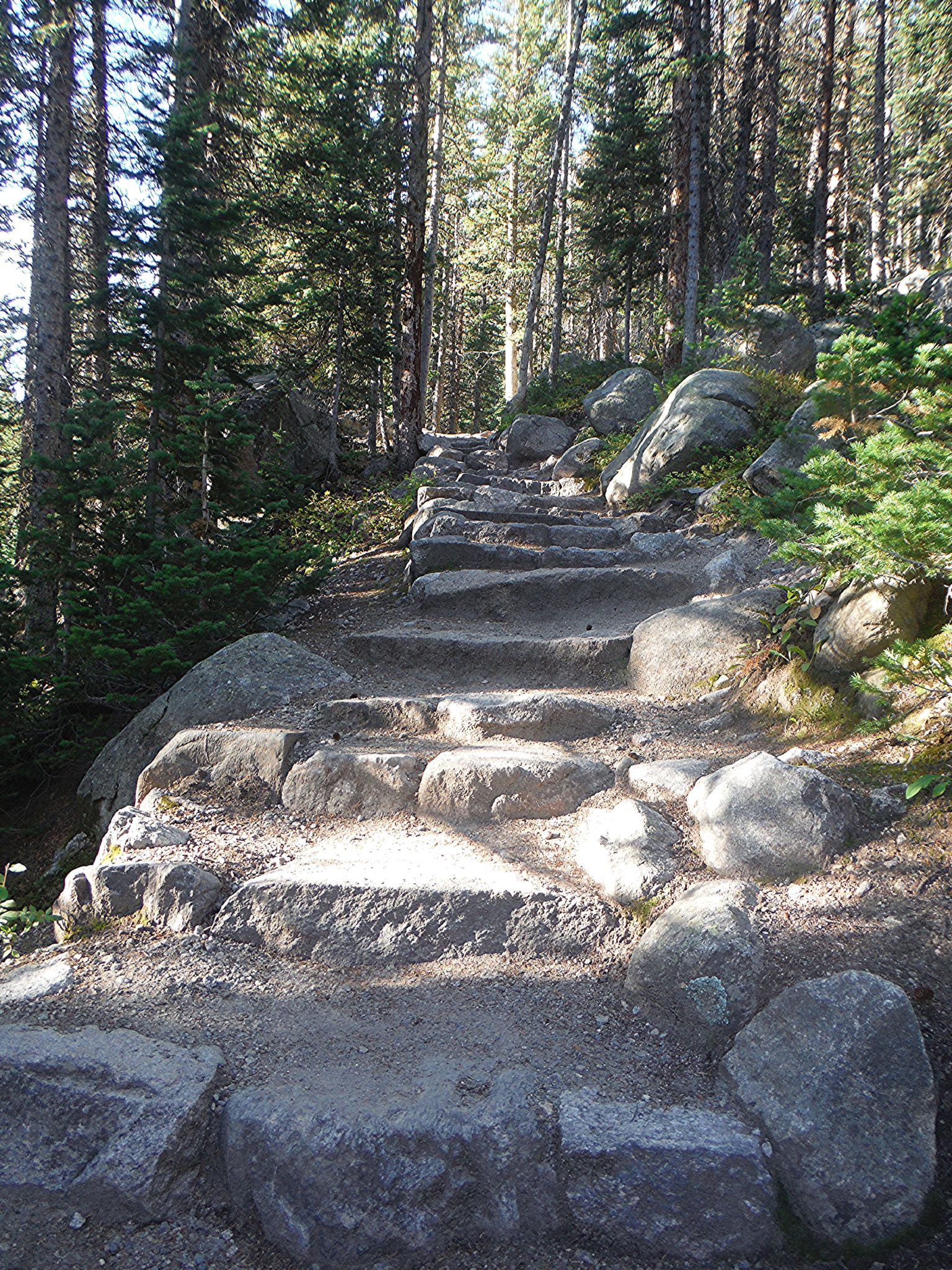
Yesterday, Les Beery hiked to Black Lake RMNP. This is one of the most scenic lakes in Glacier Gorge. Surrounded by tall granite cliffs, the trail to Black passes several waterfalls above fields of wildflowers. At 4.7 miles and 10,650’ it’s a challenging hike due to the nature of the trail leading to this deep lake. Anyone that has hiked there is sure to notice the endless stairs and areas where trail crews had to chainsaw a canyon through mountains of downed timber…THANK YOU Trail Crew! The brook trout were feeding at Black and I also educated a few rainbow trout on the way back that were enjoying terrestrials along the trail at Mills Lake. My favorite flying ant pattern came through again.